
How many restrooms does a county fair need?
Start with attendance, then split it by hour, not just by day. A fair that draws 500 people at peak, spread across food vendors, a midway and a grandstand, needs restrooms sized to the busiest two hours, not the daily average. OSHA 1926.51(c) sets a construction-site ratio of one toilet per 20 workers, and fair organizers in Bellevue use that same math as a floor, then add units for public flow around stages and beer gardens. Our how many porta potties do I need guide walks through the count step by step. For a weekend fair, most planners land between standard rentals by the day and a full event restroom rental package that bundles delivery, service and pickup into one price. ADA Standards 213.2 requires at least 5 percent of clustered single-user units to be accessible, with a minimum of one, so a bank of 13 units needs at least one ADA accessible porta potty placed on a route that meets the ADA Standards 403.5.1 clear width of 36 inches. Fairs in Bellevue often add a 4 stall restroom trailer near the grandstand so lines move faster during intermission. If the fairground sits near Bellevue's food vendor row, pair units with a handwashing station rental since OSHA 1926.51(a)(1) calls for an adequate supply of potable water at any place of employment, vendor booths included.
What restroom setup works for a multi-day county fair?
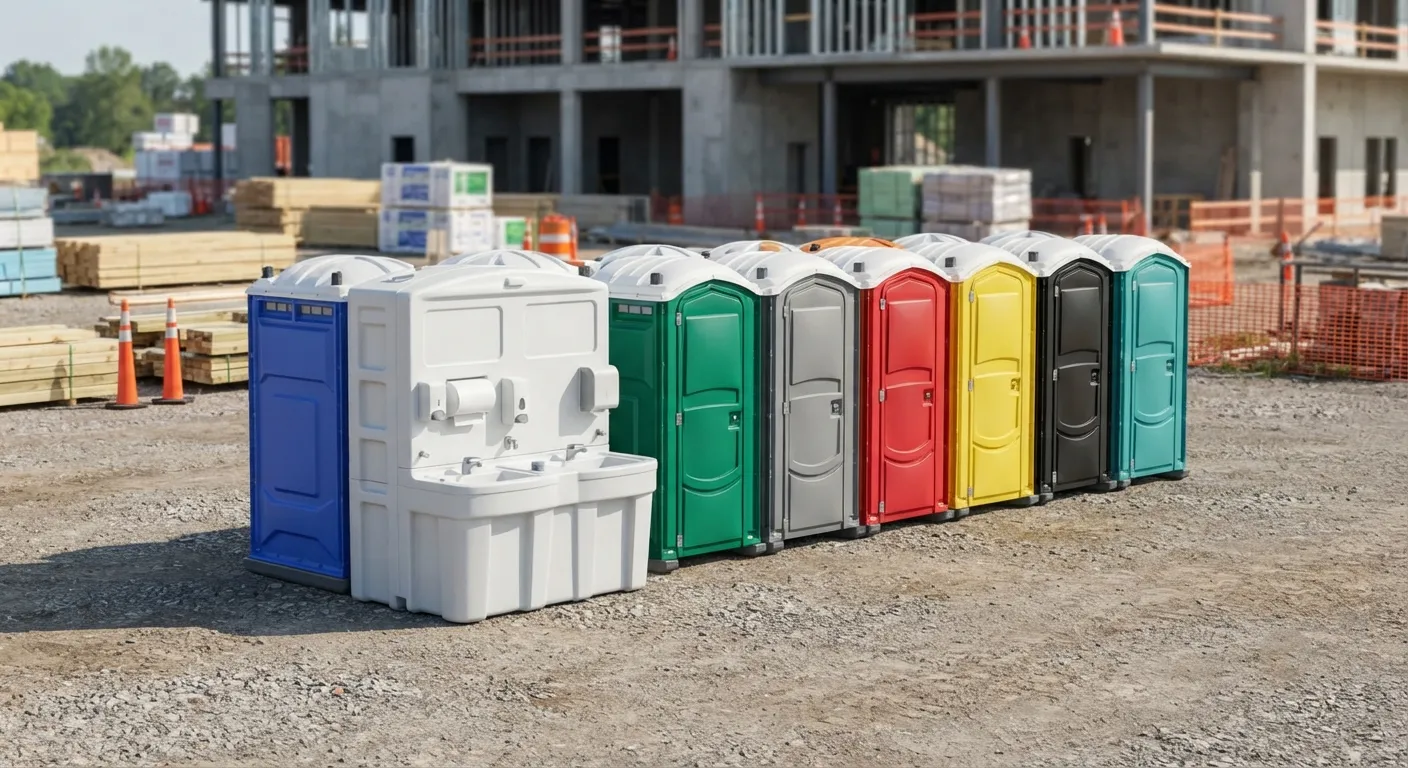
A three-day fair needs a mix: standard units for general grounds, a trailer near the main stage, and handwashing stations at every food row. Standard units run in the range shown below for a full week, which covers most fair runs without a daily swap. Deluxe flushable units work well near VIP or sponsor tents, since they feel closer to a real restroom without the plumbing hookup a full trailer needs.
| unit | day | week | month |
|---|---|---|---|
| standard porta potty | $100 - $350 | $130 - $500 | $125 - $325 |
| ADA accessible unit | $200 - $400 | $240 - $500 | n/a |
| deluxe flushable unit | $85 - $1,200 | $150 - $290 | n/a |
Delivery adds a separate fee, typically $100 to $150 for a single-day event and less per unit on a week-long booking. A deluxe flushable porta potty sink still needs soap and a way to dry hands under 29 CFR 1910.141(d)(2), since hand sanitizer alone does not satisfy that standard, so we pair every deluxe cluster with a wash station. If the fair runs food trucks doing any spray cleaning with degreasers, note that OSHA 1926.51(f)(1) covers washing after paints, coatings, herbicides or insecticides specifically, not general fairground handwashing, so that citation only applies to booths actually applying those materials. For bigger stages we quote the 8 stall restroom trailer or a full restroom trailer rental, and our restroom trailer rental cost page breaks down what drives the price up or down.
Where should restrooms go on a fairground layout?
Place them at three points: the main gate, the food court, and near any grandstand or stage. Spread reduces walk time and keeps lines short during the rush right after a show ends. Every path to a unit needs a stable, firm, slip-resistant surface under ADA Standards 302.1, which matters on grass fairgrounds after rain hits Bellevue in the fall. Ground clearance also matters for delivery: a roll-off or trailer needs about 60 feet of straight clearance behind the truck, so we walk the site ahead of time with the fair coordinator. Our porta potty placement guide covers slope, distance from food service and setback from wells or catch basins. Fairs near Bellevue that pull crowds from Newcastle, 5.9 miles south, or Issaquah, 7.3 miles southeast, often need extra units near overflow parking too. Don't forget waste: a fair with food vendors generates real volume fast, and a roll-off dumpster rental or a 10 yard dumpster rental keeps the grounds from filling up trash cans by noon. If the event needs perimeter control for ticketing or crowd flow, a temporary fence rental or crowd control barrier rental does that job alongside the restroom plan, and grease from fry vendors should route through grease trap pumping if there's a fixed kitchen tent on site.
How far in advance should I book county fair restrooms?
Book six to eight weeks out for a weekend fair, longer if it overlaps a holiday weekend. Bellevue fairgrounds fill fast in summer and fall, and trailer units especially need lead time since delivery trucks need that 60 foot clearance staged and confirmed.
Do county fairs need ADA-compliant restrooms?
Yes. ADA Standards 213.2 requires at least 5 percent of a cluster to be accessible, with a minimum of one unit regardless of cluster size. Pair it with a route meeting the 36 inch clear width in ADA Standards 403.5.1 and a 60 inch turning circle under ADA Standards 304.3.1.
How often are restrooms serviced during a multi-day fair?
Daily is standard for a busy fair. Baseline service intervals under ANSI/PSAI Z4.3 assume roughly 10 users per unit over a 40 hour week, so higher foot traffic at a fair pushes servicing to once or twice daily depending on attendance.
Can I rent restrooms just for fair weekends?
Yes, weekend rates apply and run below a full week's price. Ask about bundling a deluxe unit or trailer with your general grounds units so delivery happens in one trip instead of several separate visits.
What if a food vendor needs handwashing separate from restrooms?
Vendors need their own wash setup. A portable sink rental or hand station keeps food handlers compliant without walking to the main restroom bank, and it speeds up health inspection sign-off on fair day.
Next step
Get a delivery date
Tell us the address, the dates and the headcount. We size the order and confirm the route.