What does OSHA actually require for handwashing on a job site?
The short answer: it depends on what your crew is doing. General construction sanitation falls under OSHA 1926.51(c), which sets toilet counts by crew size, one facility for 20 workers or fewer, scaling up from there. That standard covers toilets more than handwashing specifically. Where the real handwashing trigger kicks in is 1926.51(f)(1), and it is narrow: it applies when employees are applying paints, coatings, herbicides or insecticides, or working with other harmful contaminants. If your Bellevue crew is spraying finish on a deck or treating a lot for weeds, that rule applies directly and a wash station belongs on site, not just a toilet. Pair it with 1926.51(a)(1), which requires an adequate supply of potable water at any place of employment. A lot of Bellevue contractors handle both requirements with one combo unit: a standard porta potty rental plus a free-standing sink. If your crew works in general industry rather than construction, note that toilet ratios shift to 1910.141(c)(1)(i), a different table entirely.
Why do food vendors and farm crews need a different setup?
Food service and agricultural work carry their own rules, and they are stricter about proximity, not just presence. Field sanitation for hand-labor agricultural work falls under OSHA 1928.110, which calls for potable water, toilets and handwashing within a quarter mile walk of where people are working, at a ratio of one facility per 20 employees. That is tighter than most construction jobs, where a unit at the site entrance is usually enough. Bellevue has plenty of landscaping and nursery operations that fall into this category, and a farmers market vendor or a farm and agricultural restrooms setup needs to plan the quarter-mile distance before crews show up, not after. Food trucks and concession stands at events lean on the same handwashing logic as painters and coating crews: contact with a contaminant, in this case raw food, triggers a wash station requirement. A portable sink rental with soap and towels satisfies that need at a market stall or a job trailer alike.
Where should a handwashing station go on an ADA-compliant site?
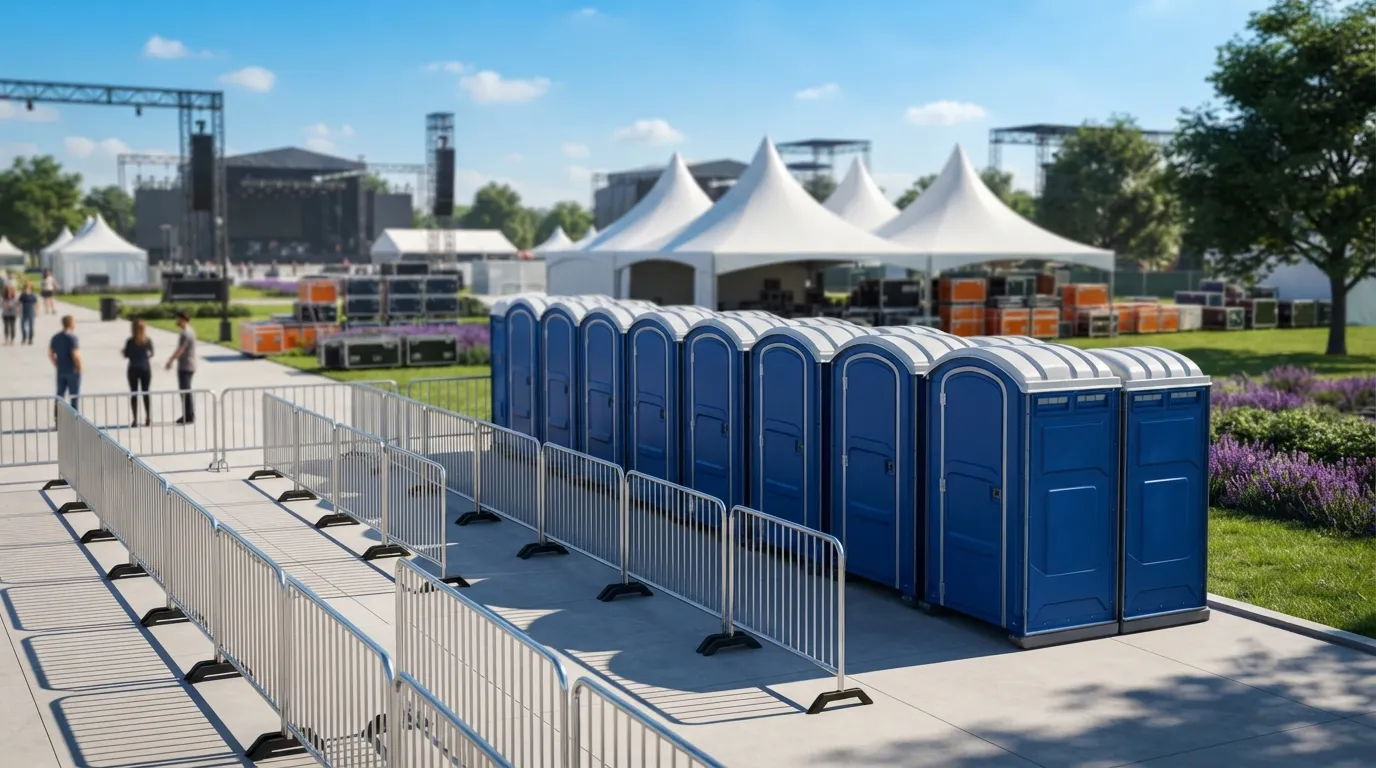
Placement matters as much as having the unit at all. ADA Standards section 403.5.1 sets a 36 inch minimum clear width for the accessible route leading to the station, and section 404.2.3 requires at least a 32 inch clear door opening if the unit is enclosed. Section 304.3.1 calls for a 60 inch turning circle nearby, and section 308.2.1 limits the forward reach for controls to 48 inches high and 15 inches low. Faucets and pumps need to meet section 309.4: operable with one hand, no tight grasping or twisting, five pounds of force max. Section 213.2 applies when you cluster several single-user units together: at least 5 percent must be accessible, and never fewer than one. Ground under the unit needs to be stable and slip resistant per section 302.1, which rules out loose gravel or soft turf on a Bellevue site in wet months. Our ADA accessible porta potty placements follow the same porta potty placement guide logic: firm ground, a clear route, room to turn a chair around.
Can I just use hand sanitizer instead of a sink?
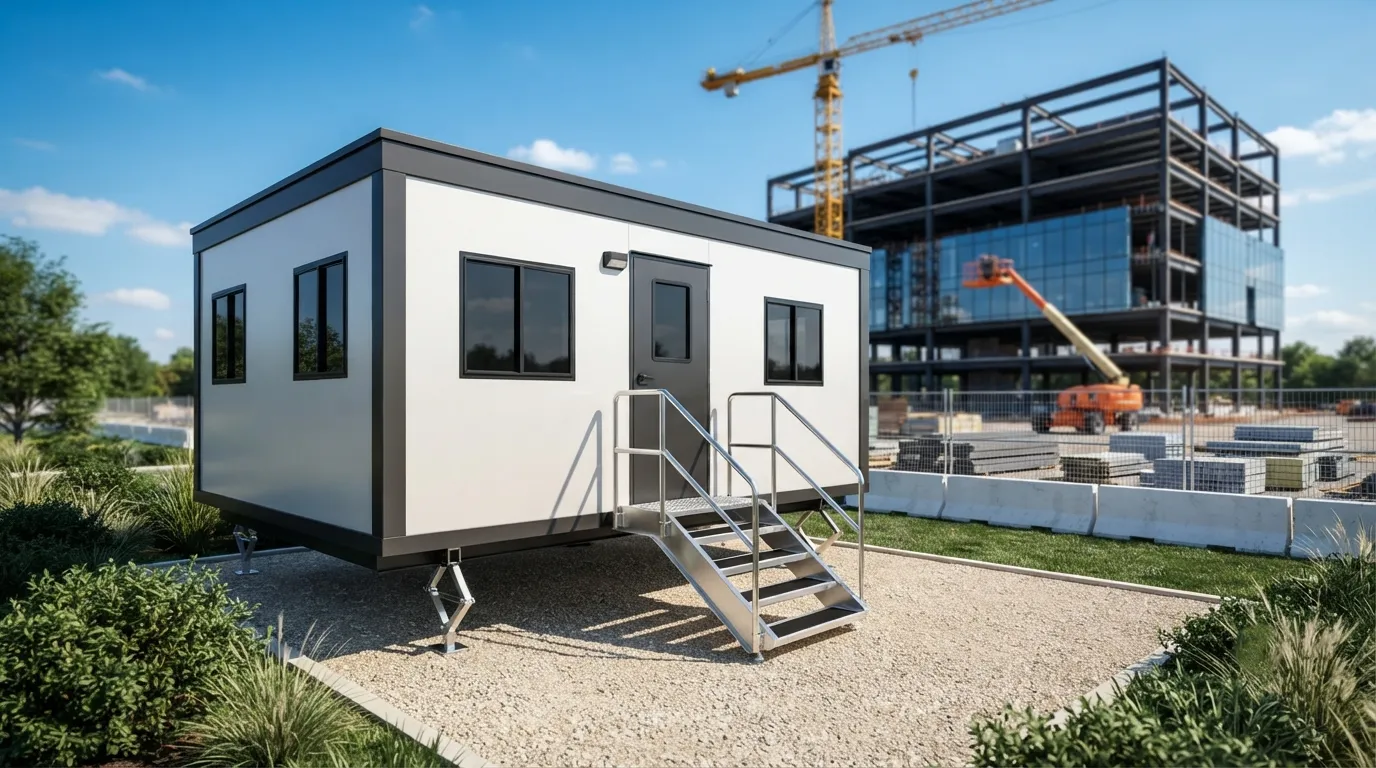
No. Sanitizer does not satisfy 29 CFR 1910.141(d)(2), which specifically calls for soap and towels or a mechanical dryer. A hand sanitizer station rental is a fine supplement at an event entrance or a break area, but it cannot replace the wash station where the OSHA contaminant triggers apply, and inspectors in Bellevue will look for both if your crew is spraying or coating. Most job sites end up running a sanitizer stand near the gate and a full sink near the work area. If you are ordering for a construction site, bundle it into your construction site services order alongside dumpsters and toilets so delivery happens in one trip. Renovation crews working a single-family remodel in Bellevue often add just one combo unit; a home renovation porta potty order with an attached sink usually covers both the toilet count and the wash requirement for a crew of four or five.
Bellevue sites near Mercer Island, 6.1 miles southwest, and Newcastle, 5.9 miles south, often share equipment on the same delivery route, so ordering early gets you a better slot. Crews working closer to Medina, 7.3 miles northwest, or Clyde Hill, 5.4 miles northwest, see the same delivery windows. Check our service areas page for the full coverage list, or start with a request a quote if you already know your unit count. For general placement rules on toilets and wash stations together, the handwashing station rental page walks through unit types side by side.
Do I need a permit for a handwashing station in the right of way?
If the unit sits on private property or a job site, no permit issue applies. Placement in the public right of way needs confirming with the City of Bellevue directly; check our porta potty permit requirements page before setting anything on a sidewalk or street.
How many handwashing stations does a 15 person crew need?
ANSI/PSAI Z4.3 sets a baseline service interval of once weekly for up to 10 users over a 40 hour week. For 15 people, most Bellevue contractors run one combo unit plus a backup sink, then service twice weekly rather than adding a second full station.
What is the difference between a wash station and a sanitizer stand?
A wash station has soap, running water and towels or a dryer, meeting 29 CFR 1910.141(d)(2). A sanitizer stand is gel or foam only. See our handwashing station rental options for both.
Does a wedding or event need a handwashing station?
Most caterers require one near the food service area. Pair it with your event restroom rental or wedding restroom rental order so both arrive together.
Can I rent just a sink without a toilet?
Yes. A portable sink rental works alone for food booths, paint crews, or any site that already has toilets nearby but needs a dedicated wash point.
Next step
Get a delivery date
Tell us the address, the dates and the headcount. We size the order and confirm the route.