How many restrooms does a race route need?
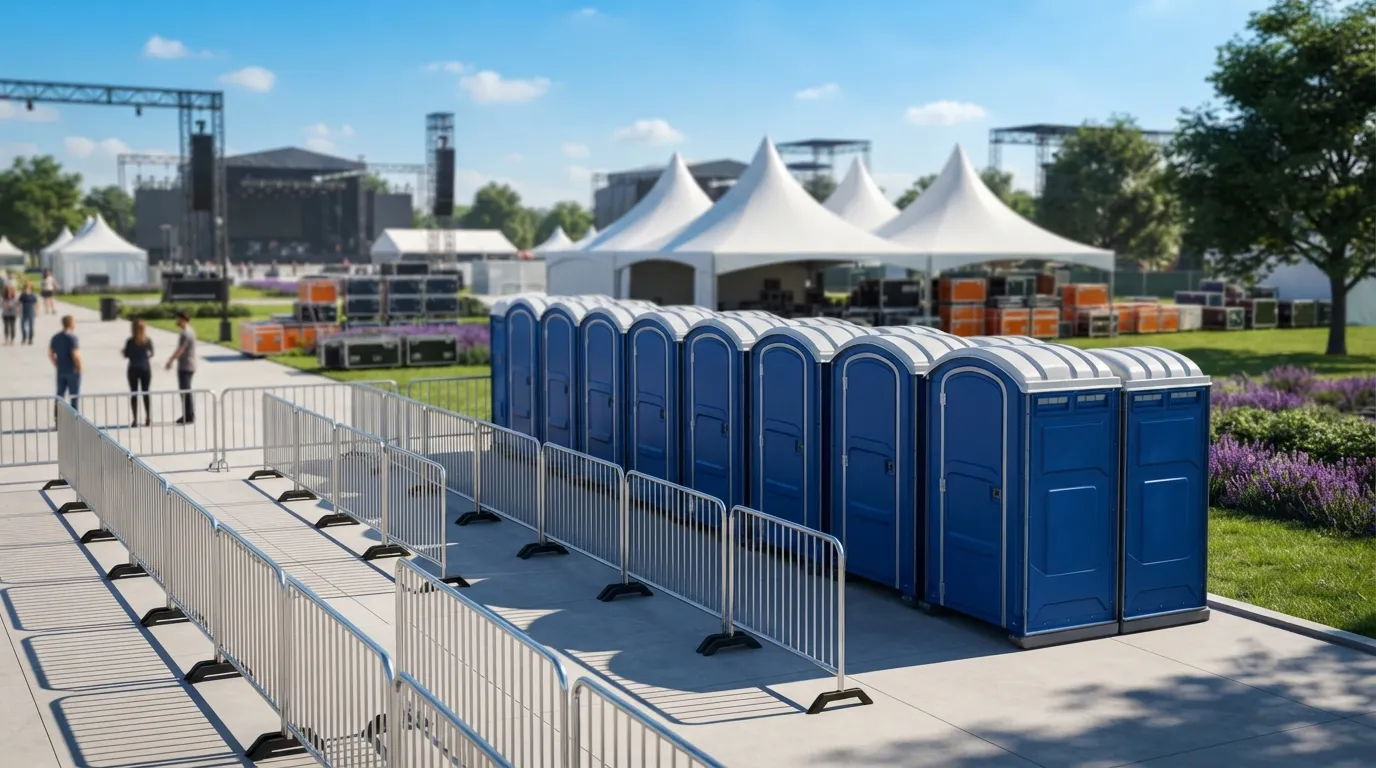
Course restrooms come down to runner count and how long people wait at each mile marker. For a road race, ANSI/PSAI Z4.3 sets the baseline service interval at one unit per 10 users across a 40 hour week, and race organizers typically run tighter than that because everyone hits the restrooms in the same 30 minute window near the gun. Standard portable toilet rental units get spread every 1 to 2 miles along the course, with heavier clusters at the start corral and finish chute where crowds bottleneck. Bellevue Porta Pros scouts drop points during route walkthroughs so trucks can service units mid-race without crossing barricades. If your race pulls runners from Newcastle, 5.9 miles south, or Issaquah, 7.3 miles southeast, build in extra units near shuttle and parking areas too. For questions on exact counts, our how many porta potties do I need guide walks through the math, and OSHA's construction ratio in 1926.51(c) is a useful reference point even though races follow race-day norms, not jobsite rules. ADA-compliant units matter here too: ADA Standards 213.2 requires at least 5 percent of any cluster to be accessible, never fewer than one unit, so a bank of ten standard units at your finish line needs at least one ADA unit alongside it. We also stage extra units at aid stations past mile 10, where lines get long as pace groups bunch together.
What do finish line and expo areas need beyond toilets?
Finish lines need more than restrooms. They need power, water access, fencing and often a shaded medical tent, and Bellevue Porta Pros coordinates all of it under one delivery schedule. Race organizers running a timing system, PA equipment or a beer garden at the finish often bring in a temporary power pole rated for the load, and knowing how to brace a temporary power pole against wind and foot traffic matters as much as the amperage itself; poles get set on stable, level ground per ADA Standards 302.1 surface guidance and guyed or braced so a gust or a jostling crowd can't tip them mid-race. Temporary fence rental sections off staging areas, medical zones and the finish chute, and chain link temporary fence panels double as crowd barriers along the last quarter mile. For expos and packet pickup the day before, a restroom trailer rental gives sponsors and VIPs flushing fixtures instead of standard units, and a 4 stall restroom trailer handles moderate expo traffic without a long service line. Handwashing matters at food tents and aid stations handing out gels and fruit; a handwashing station rental satisfies the intent of 29 CFR 1910.141(d)(2), which requires soap and towels or a hand-drying device, not sanitizer alone. If your event runs through Clyde Hill, 5.4 miles northwest, or Mercer Island, 6.1 miles southwest, we route delivery trucks to hit each site before dawn setup.
When should race organizers book restroom service?
Book 8 to 12 weeks out for a race over 2,000 runners, since weekend event rates run higher than weekday rentals and Bellevue's race calendar fills the same vendor slots every spring and fall. A standard porta potty weekend rate typically falls in a real band, and course events pulling large single-day crowds often price closer to the event tier shown below. Lock dates early if your course overlaps another race weekend, since delivery trucks need clear staging windows and Bellevue road closures can shift access routes late in planning.
| unit | duration | typical price |
|---|---|---|
| standard | weekend | $250 |
| standard | event | $400 |
| ada | weekend | $240 |
| trailer | event | $3,500 |
For full cost breakdowns by unit and season, see porta potty rental cost or restroom trailer rental cost. Races with a beer garden, food trucks or a post-race festival often add a luxury restroom trailer near the finish line for sponsors and staff, separate from the runner-facing standard units on course.
How far in advance do we need to reserve units for a marathon?
Reserve 8 to 12 weeks ahead for races over 2,000 runners. Smaller 5K or 10K events can often book 3 to 4 weeks out. Weekend and event-tier pricing applies to race-day rentals, so request a quote early once your course map and runner estimate are set.
Do we need ADA-accessible units along the course, not just at the finish?
Yes. ADA Standards 213.2 requires at least 5 percent of any clustered group to be accessible, never fewer than one unit. Spread ADA units at major aid stations, not only the finish line, so runners and spectators using mobility devices have access mid-course.
Can Bellevue Porta Pros service units mid-race without disrupting runners?
Yes, our trucks service units between wave starts or use side-street access away from the course. We plan servicing windows during the route walkthrough so pumping trucks never cross an active runner lane.
What about handwashing at aid stations handing out food?
A handwashing station rental with soap and towels meets the intent of 29 CFR 1910.141(d)(2). Sanitizer stations alone don't satisfy that standard, so aid stations serving food should pair both.
Do we need fencing around the finish line and expo area?
Most races do. Temporary fence rental sections off the chute and medical tent, and crowd control barrier rental panels line the last stretch to keep spectators off the course.
Next step
Get a delivery date
Tell us the address, the dates and the headcount. We size the order and confirm the route.